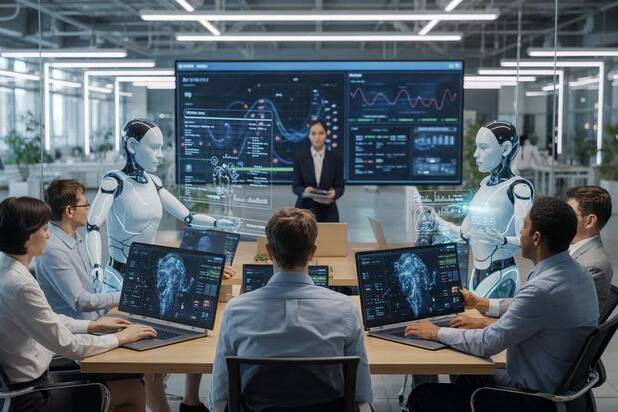



Technology in 2026: Why Ambient Software Is Replacing Traditional Interfaces
For decades, software has demanded attention. Users clicked, typed, navigated menus, and learned interfaces to get work done. Productivity depended on mastering tools rather than completing tasks.
In 2026, that paradigm is changing.
A new class of technology—ambient software—is quietly embedding itself into workflows, responding to context rather than commands. Instead of asking users to interact constantly, ambient systems observe, assist, and act in the background. This shift is redefining productivity, user experience, and how organizations think about technology adoption.
The most powerful software is becoming the least visible.
Technology Trends to Watch in 2026
1. Context-Aware Systems
Software adapts based on location, behavior, time, and intent.
2. Event-Driven Automation
Actions are triggered by real-world signals rather than manual input.
3. Reduced Interface Dependency
Voice, gestures, and passive inputs replace traditional screens.
4. Intelligent Defaults
Systems anticipate needs and present optimal options automatically.
5. Seamless Cross-Tool Orchestration
Multiple applications coordinate without user intervention.
Why Traditional Interfaces Are Losing Effectiveness
Cognitive Overload
Constant interaction drains attention and focus.
Fragmented Workflows
Switching between tools disrupts momentum.
Training Costs
Complex interfaces require ongoing education.
Human Error
Manual input increases mistakes and delays.
How Ambient Software Improves Performance
It Preserves Focus
Work happens without constant interruption.
It Reduces Friction
Tasks complete themselves based on context.
It Enhances Accuracy
Automated responses minimize errors.
It Scales Effortlessly
Ambient systems adapt without retraining.
How Businesses Can Adopt Ambient Software Strategically
Identify High-Friction Moments
Target areas where users lose time or attention.
Start With Passive Assistance
Introduce ambient features gradually.
Maintain Human Override
Control and transparency build trust.
Invest in Context Quality
Good inputs produce reliable outputs.
Measure Attention Saved
Track cognitive load reduction, not just speed.
Leadership’s Role in Ambient Adoption
Leaders must resist over-automation and ensure ambient systems support—not replace—human judgment.
Conclusion
Technology in 2026 is evolving away from screens and clicks toward quiet collaboration. Ambient software represents a future where tools adapt to people, not the other way around.
The competitive advantage belongs to organizations that understand this simple shift: the best interface is no interface at all.
Related Posts
March 9, 2026
The Human Advantage: Why Authenticity Will Be a Competitive Edge in 2026
Technology has transformed the modern business landscape in extraordinary ways.…
February 19, 2026
The Psychology of High-Performance Leadership in 2026: What Separates Elite Executives From the Rest
Markets evolve. Technology accelerates. Business models shift. But one constant…
February 17, 2026
Digital Transformation in 2026: How Smart Businesses Turn Technology Into Competitive Advantage
There was a time when “digital transformation” meant launching a website or…